
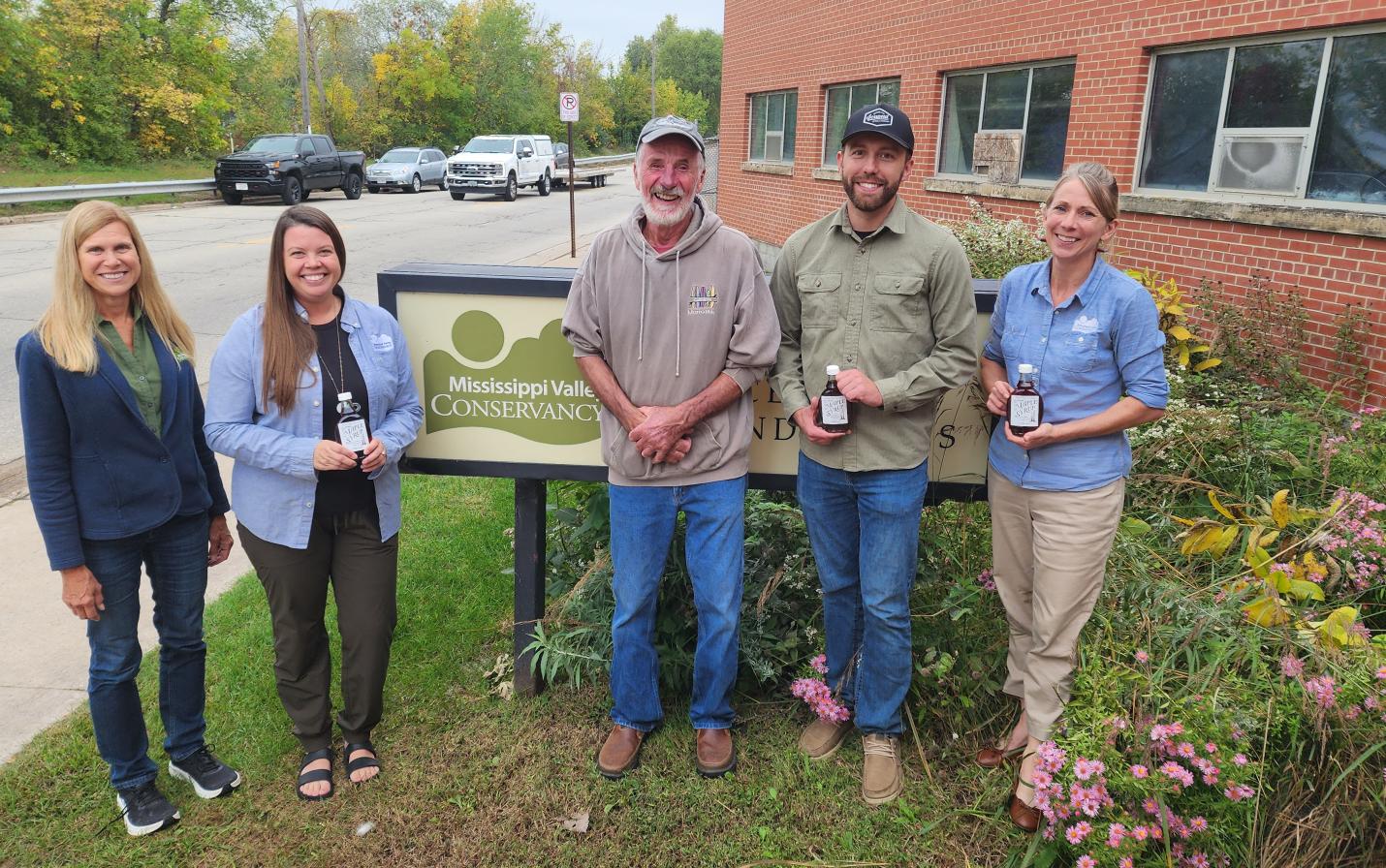
Working land is a good phrase to describe a property Mississippi Valley Conservancy protected with a conservation easement on September 30th, 2026. But the term does a disservice to the steward of this land. Dan Badtke does the work. The land and the wonderful assemblage of flora and fauna it supports are the beneficiaries of his labors. Through the conservation easement, benefits will extend to everyone who enjoys clean air, clean water, healthy wildlife, farmland preservation, and natural, scenic vistas for decades to come.
According to Dan, it’s just lifestyle, not work. It’s a way to sustainably interact with the land for what it wants to do. Tapping maples for syrup, selectively cutting and milling timber for woodworking projects, harvesting mushrooms and apples, growing a garden and hunting game are all ways of interrelating with the land in a way that is compatible with conservation goals.
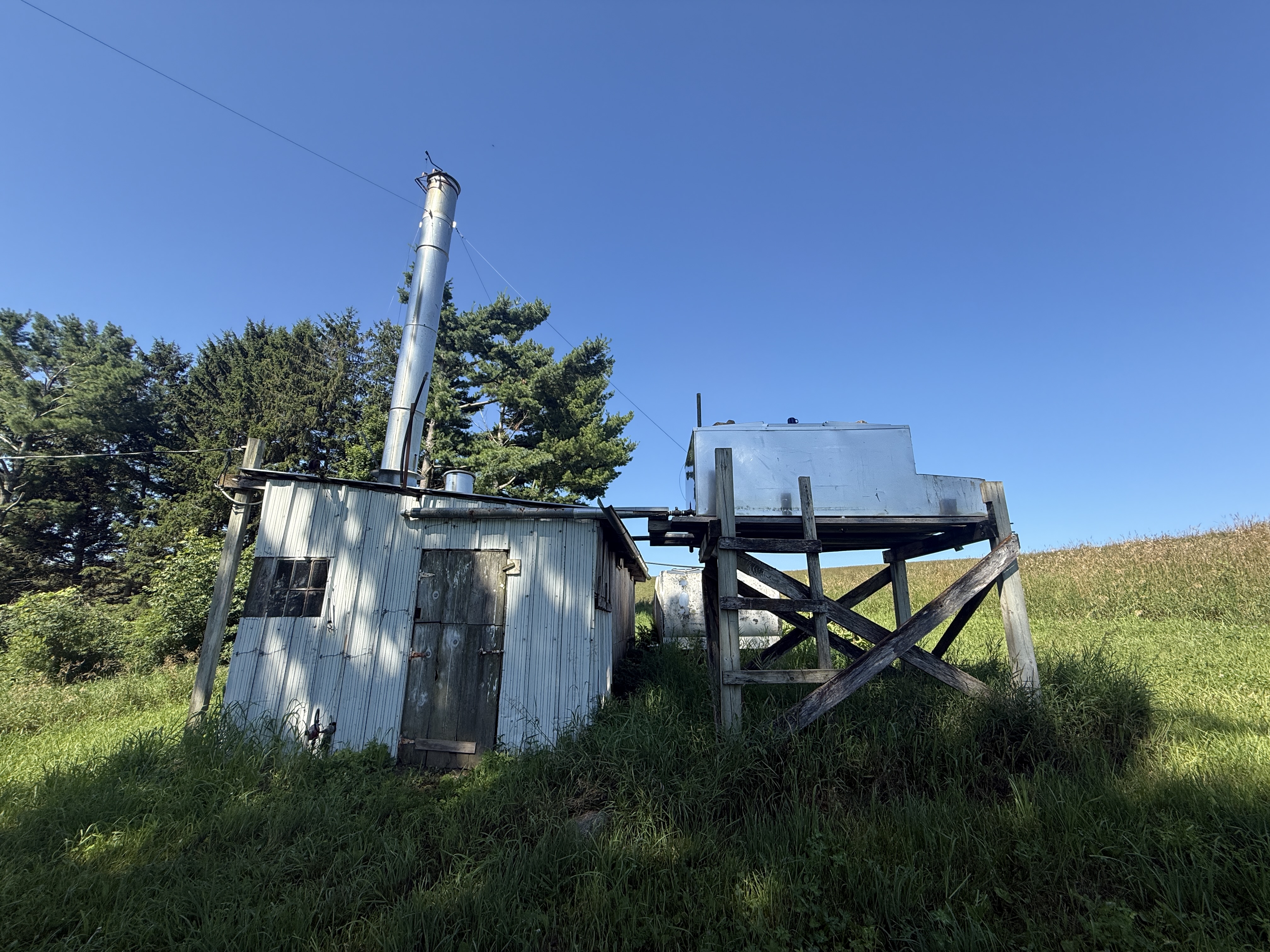
The Badtke property is Mississippi Valley Conservancy’s first conservation easement on a commercial maple syrup operation, Groves Lane Sugar Bush. The rich maple woods on the property typically produce 200-300 gallons of syrup each year, and up to 400 gallons in a good year. Extensive tubing allows Dan to gather the sap each spring, draining downhill into tanks throughout the property. Dan collects the sap and has an impressive setup of equipment to boil it down into syrup. There is a rustic cabin where he bottles the syrup. According to Dan, the timber frame cabin was built in the 1800’s by a Civil War veteran who received an 80-acre homestead for his service. About 150 years later, free-standing solar panels were installed by Ethos Solar in 2017 to power the syrup operation.
Dan came to the area from Iowa in 1980. In addition to producing crops and livestock on the open land, he has actively managed the woods for timber, sap, and mushrooms. He still produces syrup, and in the past, he would sell mushrooms (shitake and oyster) at the local farmers’ market and restaurants.
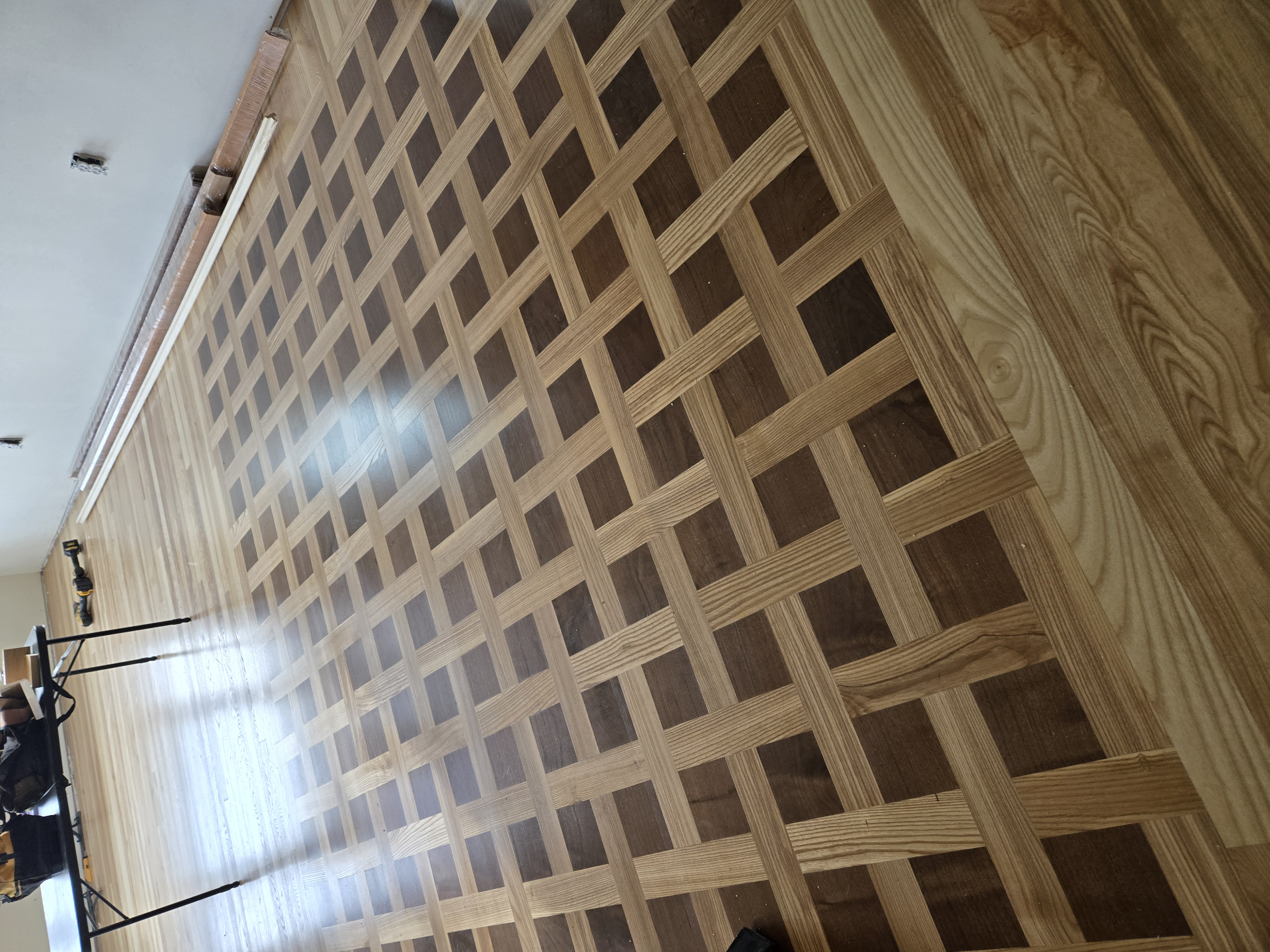
Over the years, Dan has done all of his own logging and processes the timber with a portable bandsaw mill. He has selectively harvested trees to improve the health and resilience of the forest community. Harvested trees were milled for use in his house – the flooring, cabinets, and trim are all made from wood harvested from the property. The stunning floors are walnut and ash, with three-tone cabinets featuring maple trim with walnut and cherry for the base. The parquet floors are his own design. On one of the walls, he has turned maple boards into art, displaying tap holes from years of maple syrup production.
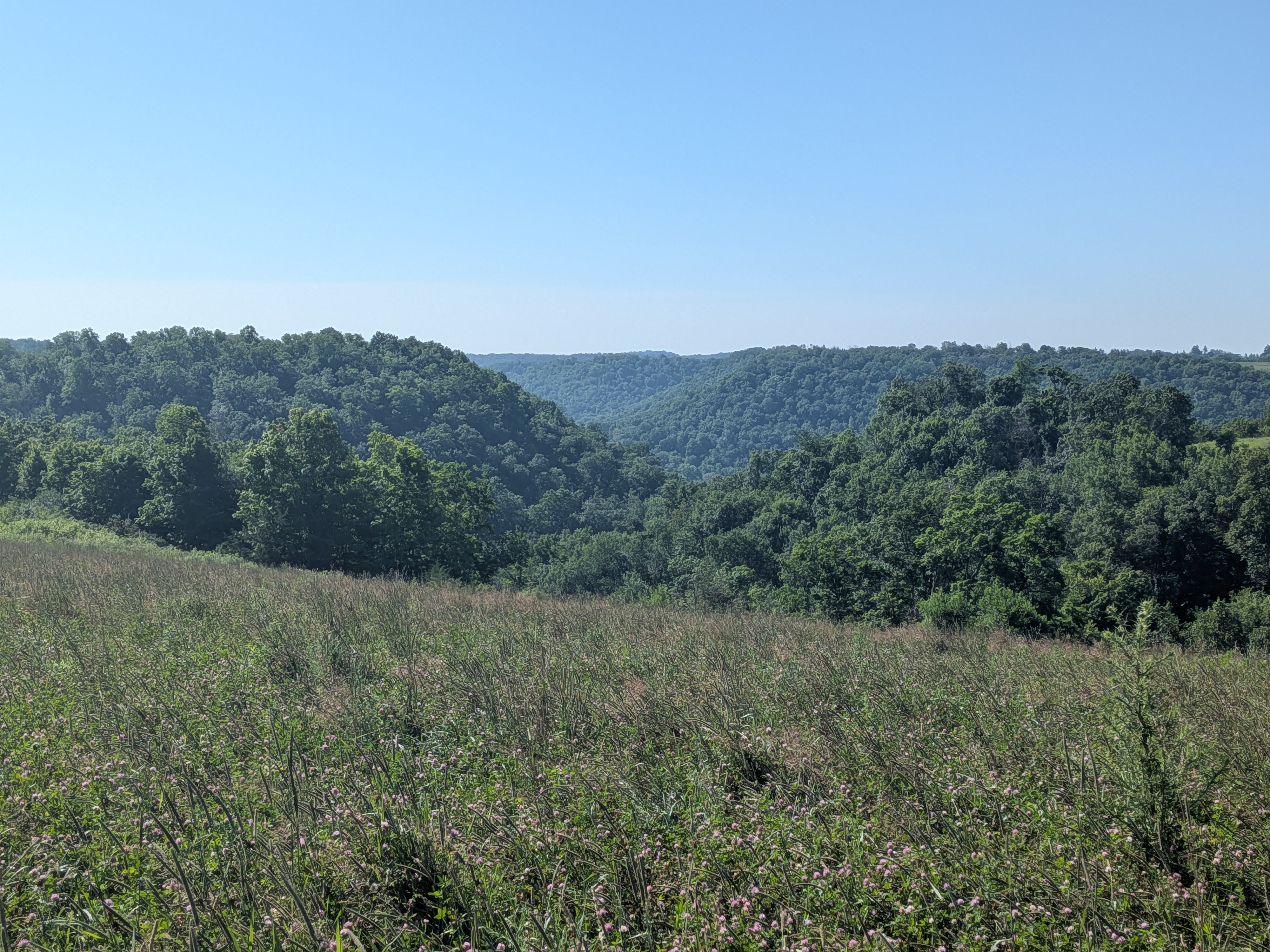
Farmland preservation is a high priority. After tilling ridgetop fields on the farm for many years, Dan recently enrolled into the USDA-NRCS Conservation Reserve Program to plant the fields to perennial cover. Dan sees the benefit of keeping permanent cover on the land to infiltrate water, keep soil in place, rebuild soil organic matter, and foster native flora and fauna. All the fields are now planted to perennial cover – grasslands managed for habitat that over time will take on prairie-like conditions. Nesting populations of species of special concern such as eastern meadowlark and dickcissels use the open grasslands. In other areas, Dan has planted hazelnuts, ninebark and sycamore. Dan has installed sediment basins to slow runoff and conserve soils, with the added bonus of attracting bats, swallows, and nighthawks. State threatened little brown and big brown bats have been documented on the property.
The open, developable fields of the property, with stunning scenic views of the surrounding rural landscape within the West Fork Kickapoo River watershed, make this land a high risk for subdivision and residential development. Dan has already received multiple offers to buy the property above market value for that purpose. The permanent conservation easement, along with Dan’s now enduring resistance to development, ensures that the land can never be split into small lots, and building construction is limited to within two small areas where the buildings and infrastructure are already in place.
The Conservancy’s easement is part of a broader effort to protect the irreplaceable resources of Vernon County. The permanent protection of this property supports local planning initiatives, including the Vernon County Land & Water Resource Management Plan, which includes goals of protecting wildlife and plant species and improving Vernon County’s forests and water quality; the Vernon County Farmland Preservation Plan, which has a primary goal of promoting and preserving a viable agricultural community; and the Vernon County Comprehensive Plan, which refers to the rural character and natural beauty of the landscape.
Every conservation easement Mississippi Valley Conservancy accepts is unique to the specific property and the wishes of the landowner for the future of the land. Dan lives on site, so accommodations for his future plans are included. The easement includes areas designated for buildings. Agriculture zones are designated for parts where sustainable agricultural activities may occur. Forest management activities such as timber stand improvement and harvest are part of the working land ethos and require an approved management plan. The easement is recorded at the register of deeds, and the restrictions pertain to all future owners of the property.
Dan is very happy that his “work” will live on. At no point in the future can his legacy be destroyed or degraded. In the meantime, he can enjoy the fruits of his labor, support the non-human occupants of the land, and share the joy of its contribution to the broader ecosystem and human experience of our beautiful Driftless Area landscape.