
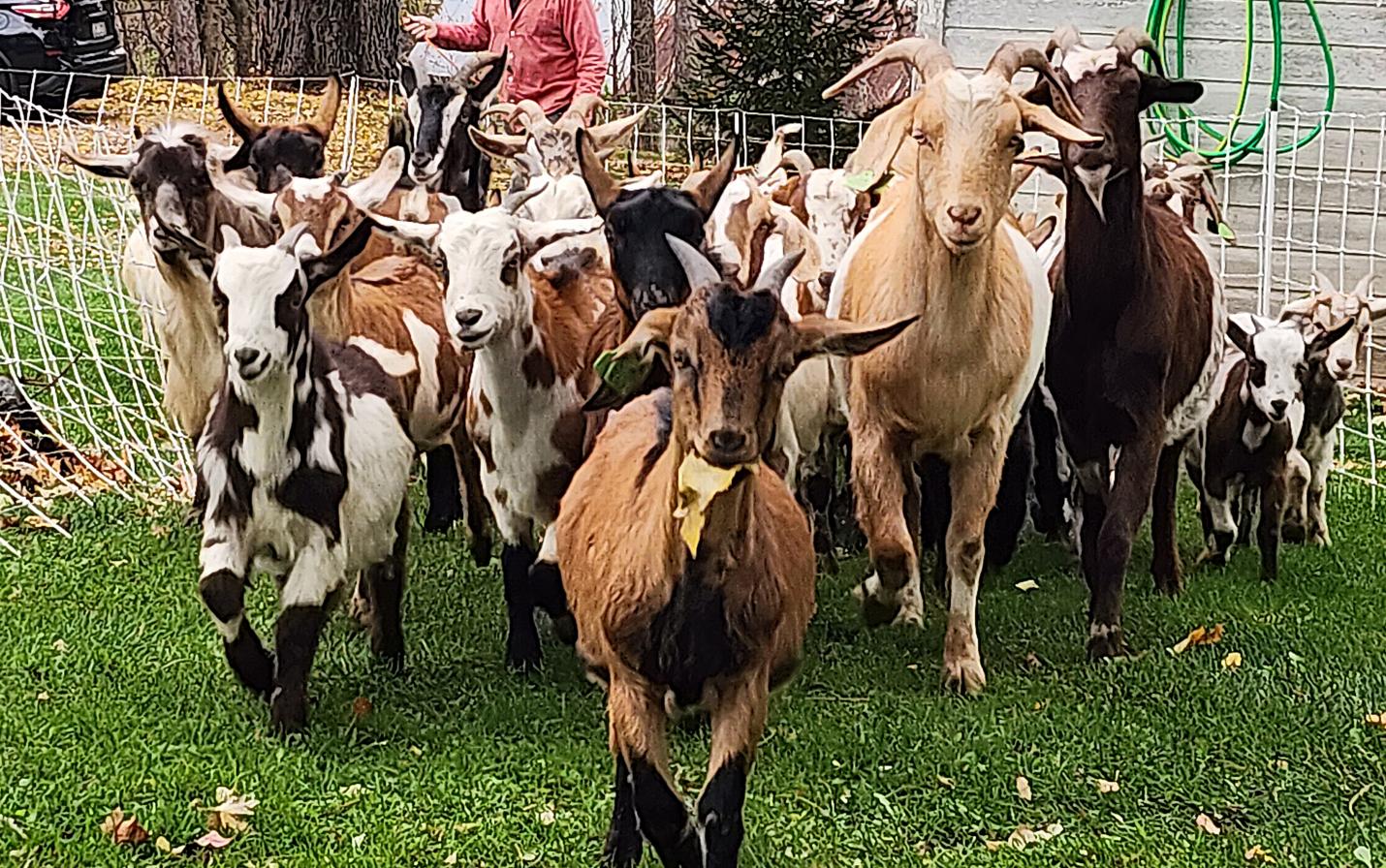
On a crisp fall morning on a Trempealeau County farm tucked between the bluffs, an unlikely conservation crew surged up a hillside, eager to get to work. They came in every color imaginable—tan, brown, black, and white—some small and nimble, others larger and more deliberate. A few naturally took the lead while the rest followed close behind. They carried no tools, required no fuel, wore no hard hats, and needed no coffee breaks. But they did arrive with one essential qualification for the job ahead: they were hungry. Extremely hungry.
These goats had one mission: tackle a patch of land that had become thick with invasive plants and weeds—turning an overgrown area into an opportunity for restoration. For landowner Karen Hanson, the project was both practical and personal, reflecting her commitment to caring for land that has been part of her husband’s family since the late 1800s.
In 2022, Karen protected her 261-acre farm with a conservation easement held by Mississippi Valley Conservancy to ensure that her family farm, with soils designated as “farmland of statewide importance” by the Natural Resources Conservation Service, would remain undeveloped and protected into the future. This protection was part of a larger dream that began with her husband Bud, who passed away eight years ago. “This farm just meant so much to my husband,” Karen explained. “He wanted to be sure the farm would always be protected.”
But simply conserving land does not mean leaving it untouched. Thoughtful, proactive management is often essential to maintaining the health of conserved landscapes. In Karen’s case, the challenge began when a portion of the cattle pasture stopped being grazed. “This strip used to be pasture,” Karen said pointing to an area completely congested with invasive buckthorn, weeds, and multiflora rose. “But once it wasn’t being used anymore, it just grew up into all kinds of weeds.” The family farm has a long history of organic practices, so using a spray to kill the weeds was not an option for her. The area was also on a very steep slope, which made mowing impossible. Instead, she began researching alternative ways to manage the vegetation and soon discovered targeted goat grazing—a method increasingly used across the country to control invasive plants without chemicals or heavy equipment.
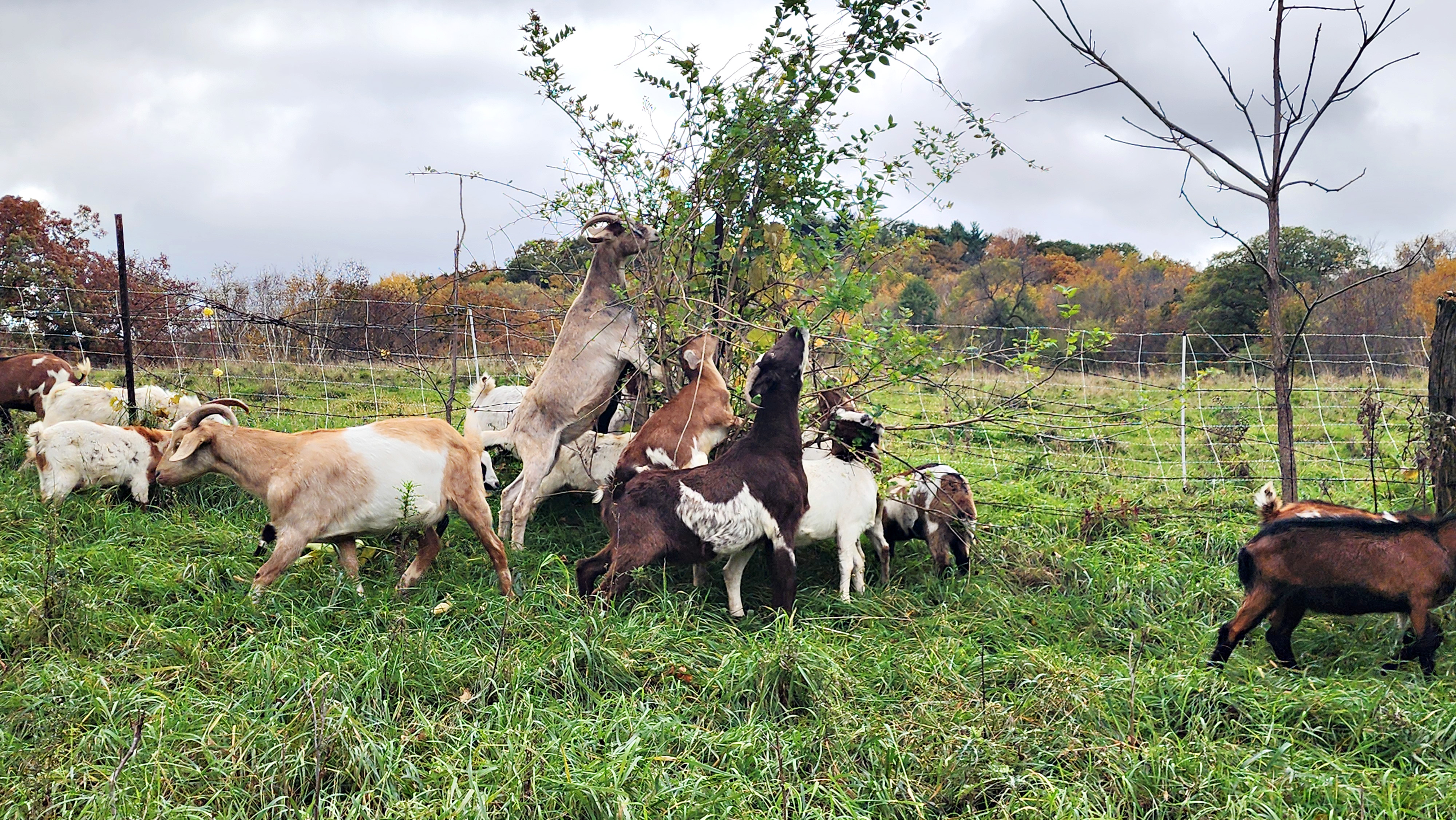
Her search led her to Vern Klingbeil, owner of Green Man Acres and a regional affiliate of Goats on the Go. After visiting the property and discussing Karen’s goals, Vern brought in a herd of Kiko and Spanish goats and set up temporary fencing around roughly an acre of dense vegetation. At first, the goats were almost impossible to see in the thick growth. But within days, their impact became clear. “After about a week, it was like a whole new landscape,” Karen said.
Goats are particularly effective at tackling invasive plants because they prefer woody shrubs, vines, and broadleaf weeds. As they graze, they also provide additional ecological benefits. Their hooves lightly disturb the soil surface, helping to aerate the ground and create conditions that allow new plantings to establish. “There are no chemicals and no heavy machinery involved,” Vern explained. “The goats remove vegetation naturally, and when we seed an area, their hooves help work that seed into the soil.”
Vern launched his goat grazing business four years ago after studying environmental science and biology. Today, he manages a herd of about 100 goats and works with landowners across western Wisconsin. He is just one of many passionate goat graziers who believe in making an environmental impact naturally across the Driftless Area. The only cautionary tale Vern shared was that goats can’t distinguish between an oak seedling and an invasive shrub, so in areas where people want to protect native trees, some extra thought needs to go into the plan.
Karen’s project ultimately expanded beyond simply clearing the overgrowth. After the goats completed their first round of grazing, she began exploring ways to establish more desirable vegetation in the area. Working with Vern and Mitchel Block, conservation specialist for the Conservancy, she decided to seed the cleared ground with a mix of prairie plants, such as butterfly-weed, black-eyed Susan, and sky-blue aster, designed to be relatively deer-resistant and easy to walk through.
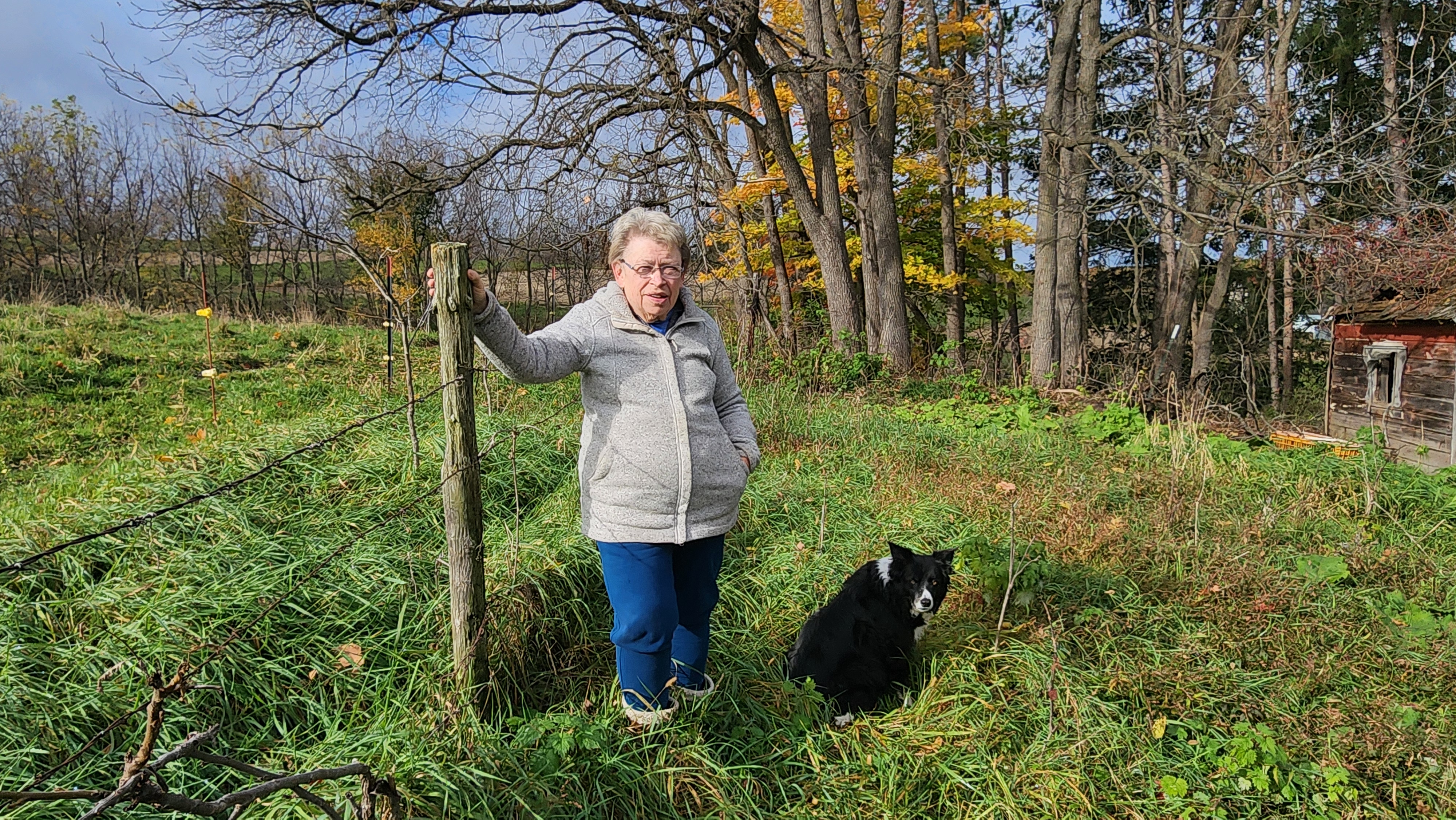
The goats returned for a second round of grazing before the seeding, helping prepare the soil. Now Karen is waiting to see what emerges this spring. Her willingness to try something new reflects a larger truth about conserved land. Conservation easements protect landscapes from residential development and mining, but they also support landowners who are actively caring for their land—managing forests, restoring habitat, and controlling invasive species.
Conservancy staff work closely with easement landowners to provide guidance and ensure that management activities support the conservation goals of each property. “Seeing Karen try an innovative solution, like targeted goat grazing, shows the kind of commitment to stewardship that these landscapes often need to remain healthy for future generations,” says Mitchel Block. “This kind of stewardship is what the conservation easement is meant to support.”
Karen sees the partnership with the Conservancy as an important part of the process. “The Conservancy encourages landowners to do things that are environmentally good for the land,” she said. For landowners facing invasive species challenges of their own, the goat-powered approach may offer an option worth considering. Brush will still resprout after the goat grazing, so it typically is one step in a management process, making an area easier to get to and a project more manageable. While goats aren’t the right solution for every situation, they can reach places that machinery cannot and offer a natural way to reduce unwanted vegetation.
On Karen’s farm, this first year of her goat grazing experiment proved to be the perfect way to attack her specific problem. And as an added benefit, their work may soon give rise to something new—a patch of native prairie where weeds and invasive shrubs once stood tall, and another example of how conserved land continues to be actively and thoughtfully cared for.