
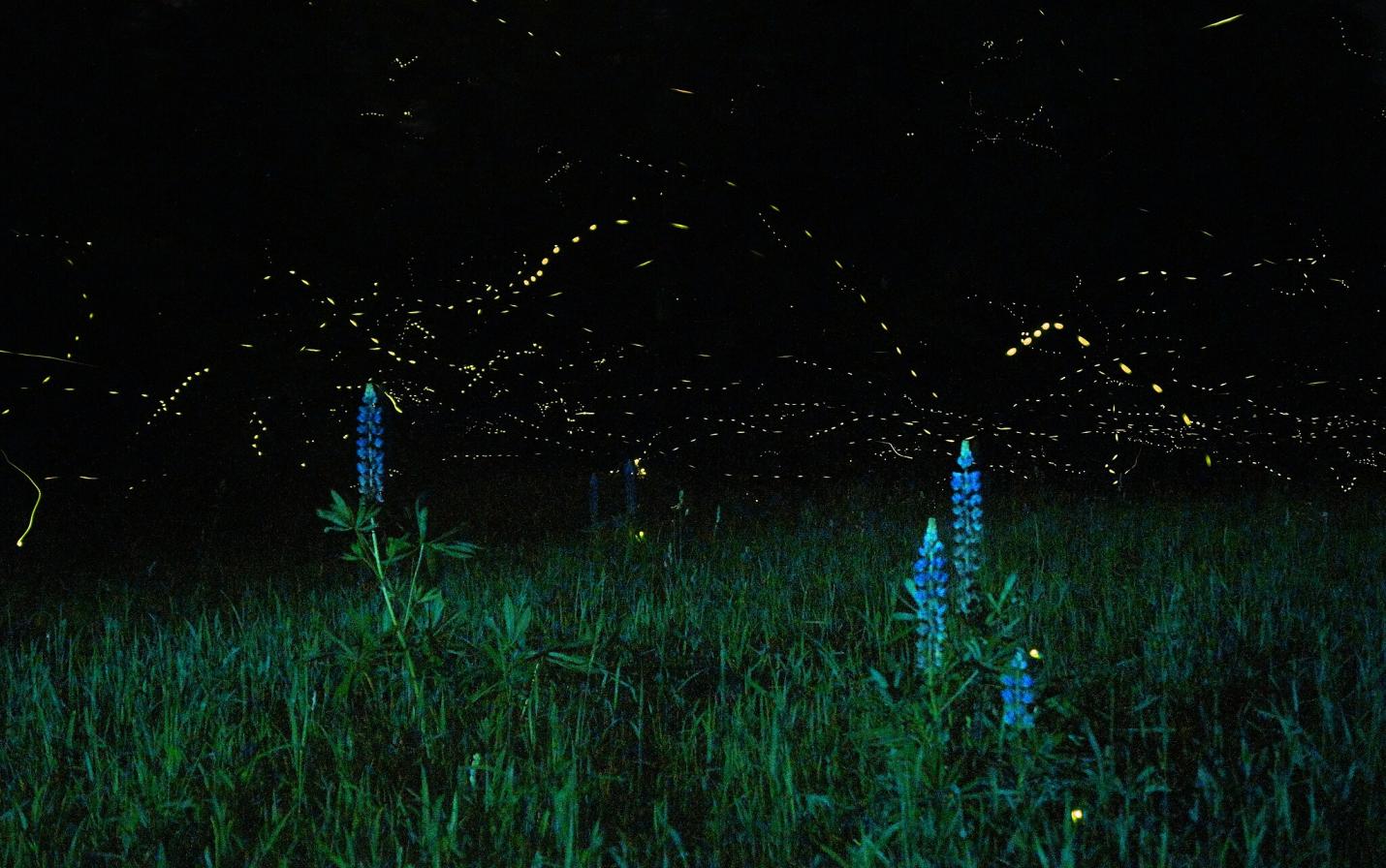
Few summer sights are as quietly magical as fireflies flickering over wet meadows and shaded ravines—and the Driftless Region of southwest Wisconsin offers some of the best habitat for them. “Firefly,” also known as “lightning bug,” refers to beetles in the family Lampyridae, a group whose diversity encompasses 179 described species and subspecies in North America and more than 2,000 worldwide.
Across North America, scientists and conservation groups have documented declines and growing evidence of pressure on some firefly species. The Xerces Society’s assessment, “State of the Fireflies,” notes that while data is sparse on firefly populations and trends— and funds to support in-depth research are limited—some species of the beetle are considered at risk from habitat loss, pesticides, climate change, and increased nighttime artificial light. Entomologists have noted year-to-year variability in sightings across southern Wisconsin. Wetter conditions after drought years can temporarily boost lightning bug birth and survival rates, obscuring long-term trends but not mitigating systemic and societal pressures.
The Driftless Region’s patchwork of hardwood forests, prairies, streamside wetlands, and pastures provides the cool, moist, and heterogeneous microclimates many firefly species need. Because fireflies spend most of their lives as larvae in the ground or dwelling in leaf litter, woodlands with undisturbed understory and wet seepages in hill hollows are important. These areas are typically the last to succumb to farming and urban development and form refuges of biodiversity. Most people are unaware that fireflies live as grubs for several years, and that treating yards with chemicals designed to kill grubs can have a devastating impact on the firefly population. With fireflies dependent on native plant communities and areas free from chemicals, the conservation of these areas therefore benefits fireflies as well as amphibians, pollinators, and the birds they feed.
Ironically, for fireflies the greatest emerging threat is one that can be turned off with the flick of a switch. How’s that for a solution? Artificial light at night is harmful because fireflies use bioluminescent flashes—those ethereal twinklings that conjure images of will-o’-the-wisps—as the primary way to find and court mates. Streetlights, yard lights, and building lights wash out these flashes or disrupt their timing, reducing mating success even where ideal habitat remains undisturbed. Expert firefly guidance emphasizes the reduction of unnecessary lighting as a simple and high-impact conservation action. Many light fixtures are installed for decoration, advertising, or convenience, not safety, and turning off some or all of these lights at night will give the fireflies a better chance for long-term survival.
Is there a code in those blinking lights? Fireflies produce light through a chemical reaction in a unique abdominal organ, and they control the flashes by regulating oxygen to it. Different species use distinctive flash patterns—numbers of blinks and intervals—as a “coded” courtship language so males and females of the same species can locate each other. Disrupt that signal with artificial light, and the conversation gets muffled.
For fireflies, the call to action—as mirrored by the Dark Skies Initiative—involves the thoughtful use of light. Dim or shield outdoor lights. Use motion sensors for farm work areas, low-intensity warm lights around the house, timers with short periods, or simply turn lights off when not needed. By making small choices like these, each of us can help keep the Driftless landscape a haven for fireflies and countless other species.
(Photo by Mike Lewinski)