
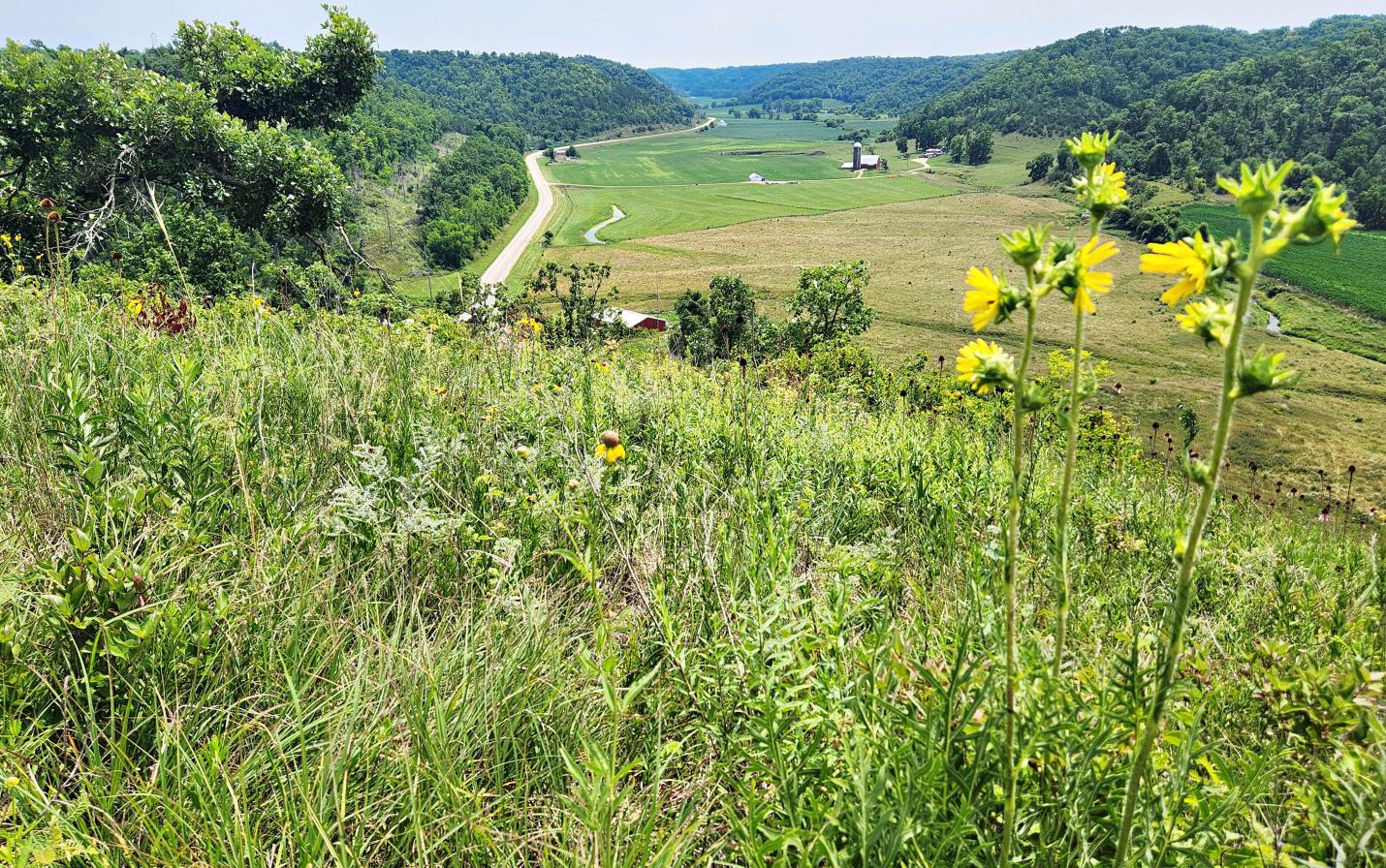
Mississippi Valley Conservancy has expanded the Boscobel Bluffs State Natural Area with the acquisition of Bald Bluff, an 86-acre property adjacent to the existing nature preserve. The newly acquired land has been carefully stewarded by Jim and Rose Sime, who purchased the property in 1985 and spent the last four decades managing it with conservation in mind.
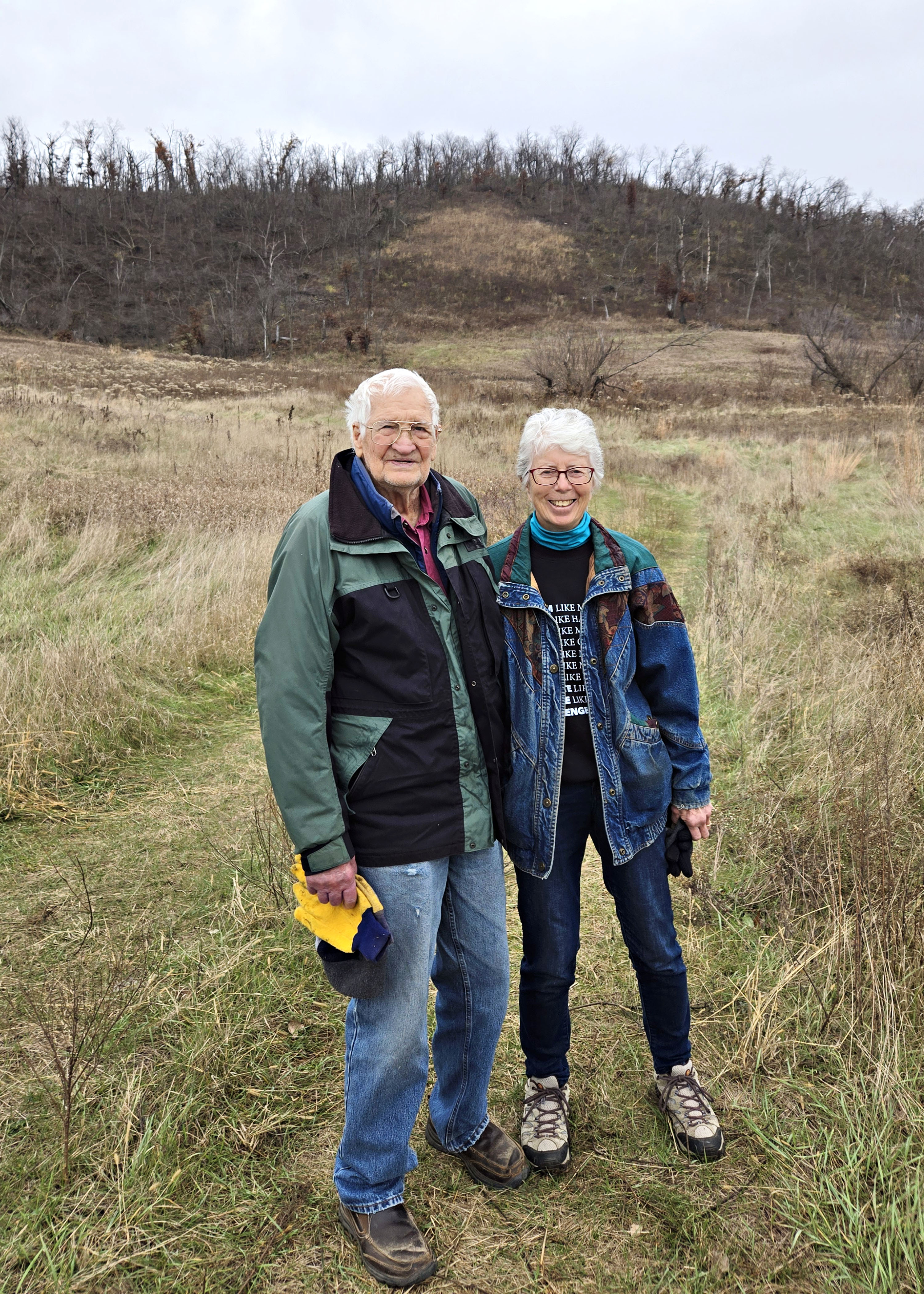
In the early years of owning the property, the Simes began prescribed burning and removing invasive species to preserve the land’s diverse natural communities. In 1998, they placed a conservation easement on the upper elevations of the property with The Prairie Enthusiasts (TPE), permanently protecting its forested blufflands and remnant bluff prairies from future development. They also enrolled the land’s agricultural fields in the USDA’s Conservation Reserve Program, planting them with perennial cover.
With the addition of Bald Bluff, the Boscobel Bluffs State Natural Area now spans 475 acres, creating a contiguous habitat block with expanded opportunities for public hiking, hunting, and nature appreciation. The Bald Bluff acquisition by the Conservancy builds on the Simes’ conservation legacy in Grant County, where they have protected two other properties through conservation easements. In addition, they recently worked with Driftless Area Land Conservancy to turn their 140-acre Big Rock property into a nature preserve, furthering their commitment to protect and share these unique ecosystems in Grant County.
Abbie Church, conservation director at the Conservancy, said, “This acquisition allows us to continue the legacy of stewardship the Simes began. It also strengthens our ability to conserve this critical habitat in Grant County. Taking on the responsibility for habitat management is a big undertaking on disturbance-dependent communities like prairie and oak woodland, and Jim and Rose made this possible by generously establishing a habitat management fund to support restoration in perpetuity.”
The purchase was made possible with funds from Wisconsin Knowles-Nelson Stewardship Fund, the National Wild Turkey Federation (NWTF) Hunting Heritage Super Fund, the Wisconsin Land Fund, and a generous donation from the Simes. NWTF has previously supported the Conservancy’s turkey habitat improvement projects and contributed to the acquisition of the 198-acre Woodman Floodplain property a few miles downstream on the Wisconsin River.
NWTF district biologist Clayton Lenk emphasized the broad public benefits of the acquisition. “It’s not just for turkey hunters,” he said. “This property provides accessible outdoor space for people from the surrounding Midwest population centers, supporting a range of recreational uses.”
The name “Bald Bluff” is a reference to the property’s three remnant bluff prairies, which Jim and Rose often refer to as the three “balds.” More than 170 plant species have been documented on the prairies, including at least five state-listed species along with notable species such as short green milkweed, cylindrical blazing star, hoary puccoon, smooth cliff brake, Indiangrass, prairie dropseed, and porcupine grass.
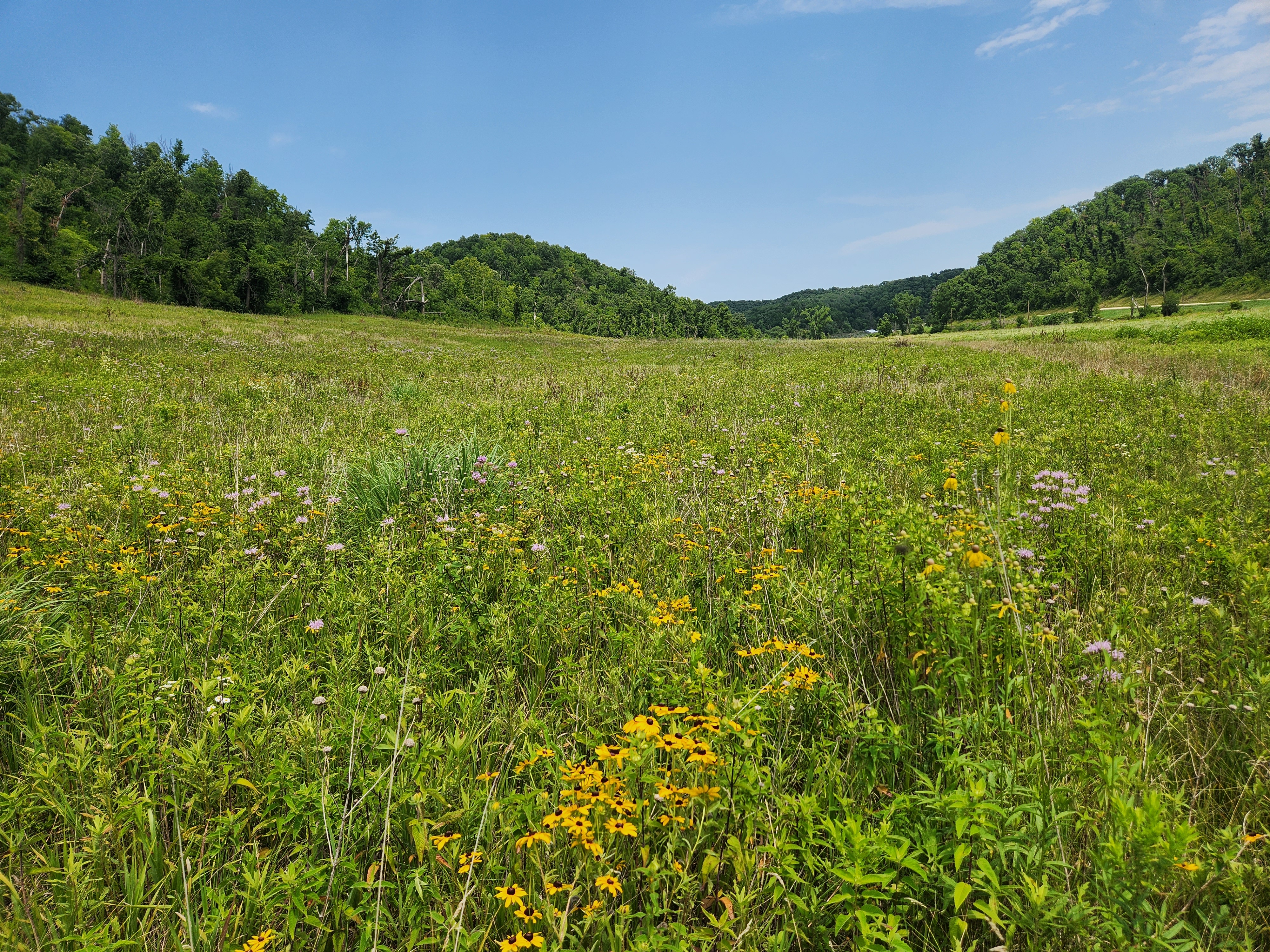
The forested portions of the property are dominated by mature bur, red, and white oak with understory species including lead plant, Canada wild rye, panic-grass, upland boneset, alumroot, and Culvers root. The forested blufflands and open grasslands provide habitat for species such as whitetail deer, wild turkey, black-billed cuckoo, yellow-billed cuckoo, blue gray gnatcatcher, gray catbird, barred owl, Cooper’s hawk, red-tailed hawk, and many more.
Jim traced his love of the land to his grandfather who lived on the edge of Soldiers Grove and would take Jim on hikes to look at the flowers. “Then he’d pretend to get lost and tell me to find my way back and taught me the names of all of the flowers,” which really enhanced his sense of adventure and appreciation for natural areas.
As a young man, Jim knew he wanted to own some land and finally saved enough to buy 80 acres of steep and rocky pasture and woods in 1965. In the late sixties, Jim found out that they were going to put a bike trail through an adjacent area which was filled with prairie forbs and grasses, and so he “started digging up as many plants as he could, planting them on the 15 acre prairie at the top of the bluff,” according to Rose, “and to this day, people are amazed that he started prairie restoration back in the sixties.”
A self-described amateur botanist, he started studying everything he could learn about the plants on his properties and in the area and discovered that his property has an incredible amount of diversity. Rose cherishes the after-effects of the controlled burns, creating “a tapestry of greens and flowers as the summer turns to fall. It is infectious to work on the land, and not just for the boys,” said Rose with a laugh as she described working with the chainsaw and running the drip torch during their burns.
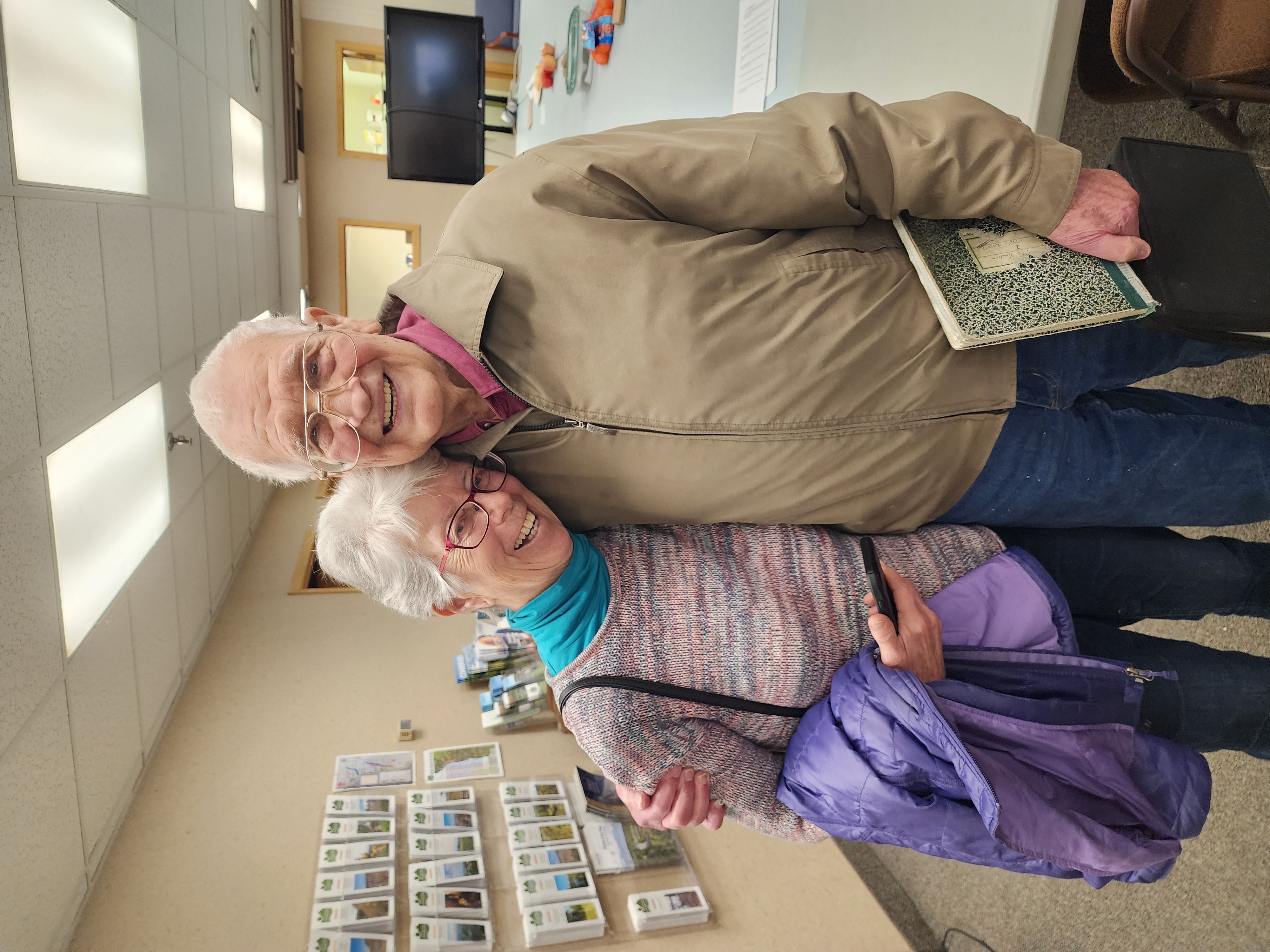
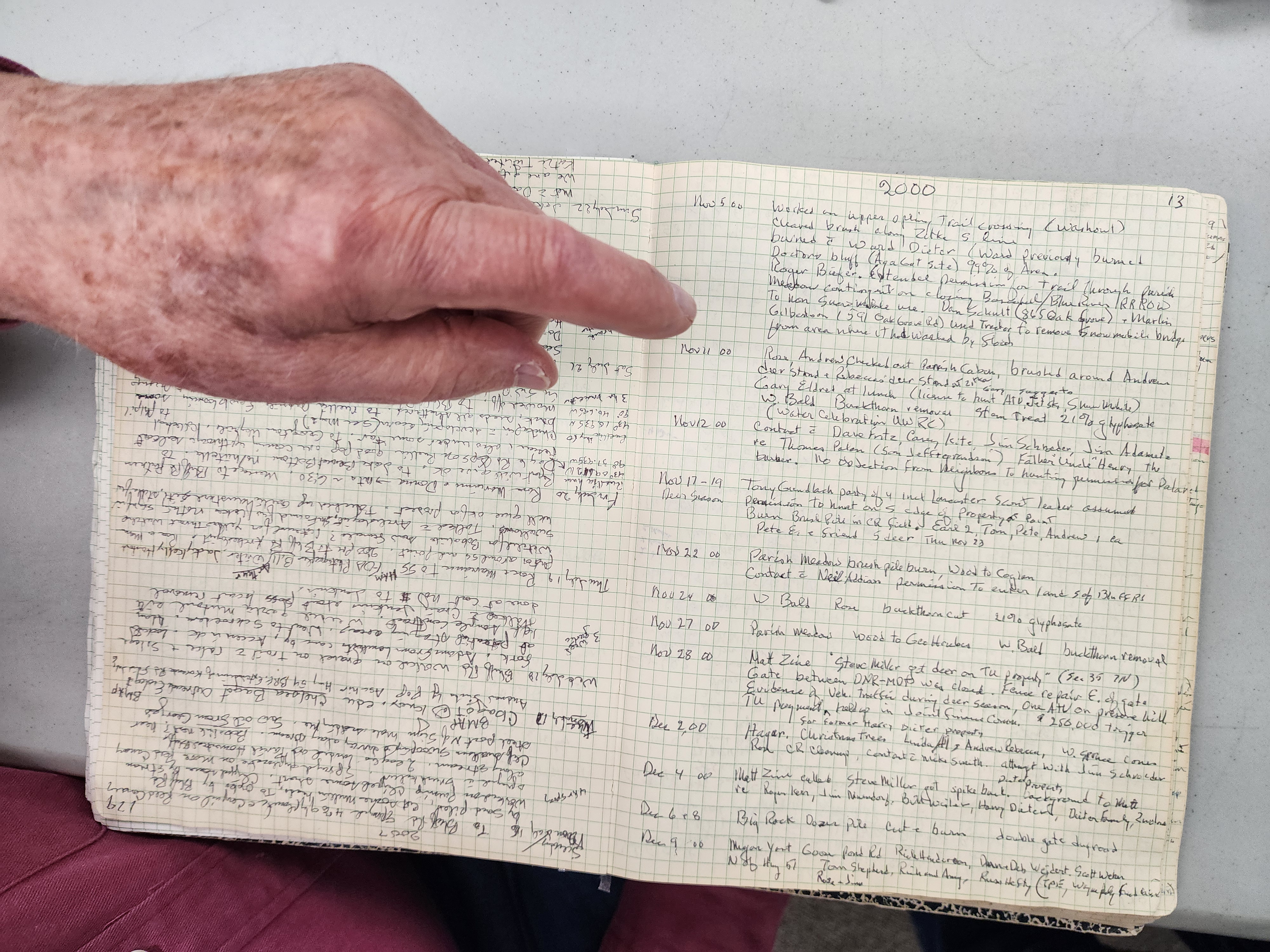
In a recorded interview with students taking an Environmental Conservation in the Driftless course from the University of Wisconsin–La Crosse, Rose described their years of careful land stewardship—especially the process of identifying its many species—as “days filled with awe.” After 40 years of documenting all of the changes to the land, Jim has boxes and boxes of journals to tell the story for generations to come. Jim encouraged the young interviewers to keep a journal as he did, recording each day at a property the new things they found and who they did it with. “It will make you live longer if you do it,” he added with a smile. “That’s how Abbie knew the exact date of her first visit to the Boscobel property; it was noted in my journal.”
Over time, the couple, both former teachers in Madison, acquired more than 600 acres in the Driftless Area that have been protected through conservation easements or other partnerships with conservation organizations. “We’re no longer buying,” Rose said with a laugh. “We have always just enjoyed spending time on the land and working the land was fun,” she said. It was a way to make friends and share accomplishments, but they have always dreamed of eventually turning the land over to others who will protect it forever, and that time is now.
If you have spent years caring for a piece of land and want to ensure its natural beauty and ecological value are protected for generations to come like Jim and Rose have done, contact the Conservancy at (608)784-3606 or MississippiValleyConservancy.org. For those interested in exploring Boscobel Bluffs SNA and learning more about how to protect the land, the Conservancy regularly offers volunteer work parties. Visit the Events Calendar to find the dates that work best for you!
Special thanks to Atira Conservation which supported this acquisition through a grant to assist with closing costs!