
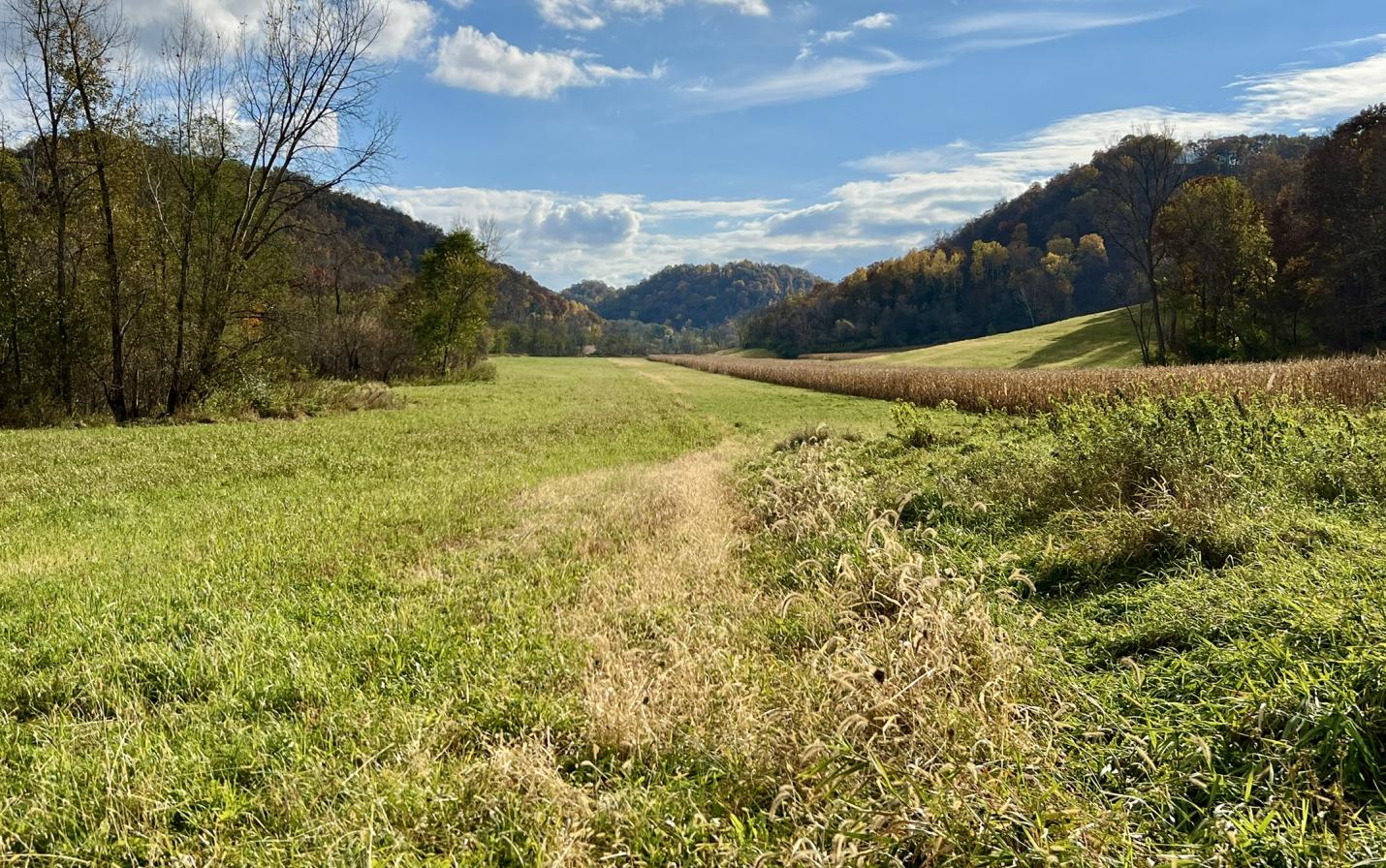
When they acquired 87 acres of land nestled between bluffs near the Mississippi River in Vernon County back in 1993, Marilyn Adam and Ralph Tauke had a good idea of what they were getting into. They had both been raised on dairy farms in northeast Iowa, so they knew that caring for land would be a big undertaking. Some years later, they acquired additional acreage across the road while considering the wishes of the previous owner who had expressed a desire to protect her land from development. In November 2025, Marilyn and Ralph signed an agreement with Mississippi Valley Conservancy to ensure that none of their 127 acres of land will ever be subdivided or developed.
(Photo above: Conservation practices like crop rotation, no-till planting, and grassed waterways keep these fields—and the soil beneath them—healthy for generations to come. (Photo by Sarah Bratnober))
Their primary objective in buying land was to have a place where they could live near their jobs in La Crosse and enjoy caring for and riding their horses right outside their door. Marilyn had ridden horses all her life, and she and Ralph had one of those “love me, love my horses” marriages. Ralph fulfilled that wish, and they moved to the farm where they enjoyed the quiet open space for horseback riding, hiking, birdwatching, and hunting.
Their exceptionally scenic property is nestled in a valley just southeast of Stoddard and contains rolling agricultural fields and two large forested bluffs that offer views of the Mississippi River all the way to Brownsville, MN. While they don’t farm the land themselves, Marilyn and Ralph have a cooperating farmer who manages it with conservation practices that include crop rotation, no-till farming, contour planting, alternating strips, and grassed waterways to filter runoff, prevent erosion and support soil health to protect the farmland soils, some of which are designated as “farmland of statewide importance” and “prime farmland.”
The proximity of their land to Coon Creek was an important consideration for Marilyn and Ralph as they sought to lease their agricultural fields. They recounted times when water was over the road in both directions from their property, and they knew that using chemicals on their low-lying hilly fields was a threat to water, to pollinators, and to the health of their soil. When they approached two brothers who were operating a nearby farm about leasing their fields, Marilyn and Ralph expressed their desire to keep chemicals off the land. The brothers agreed to give it a try. As their relationship with the farmers grew, they also discussed with them the idea of organic farming. The brothers were amenable to that idea, too, and they’ve been producing organic alfalfa, corn and hay on the property’s 50 acres of cropland ever since.
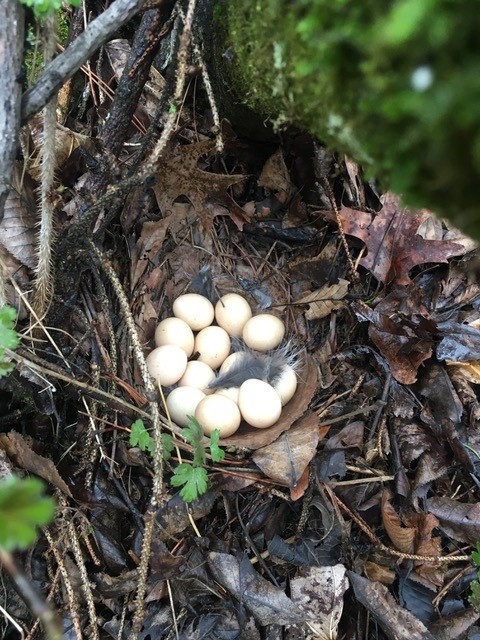
Other inhabitants of the property also benefit from Marilyn and Ralph’s wise land management practices. The state threatened little brown bat uses the property, which is part of a forested corridor that connects with the Mississippi River valley two miles to the west. Little brown bats use the Mississippi River as a migratory flyway, as do a diversity of migratory songbirds, including ovenbirds, hermit thrushes, yellow-rumped warblers, blue-winged warblers, and American redstarts that have all been seen on the property. Ralph once found a nest full of grouse eggs on the property, where he has hunted for turkey, deer, squirrel, and mushrooms. Marilyn recalls hearing the song of the whip-poor-will higher up in the valley, but that was some years ago.
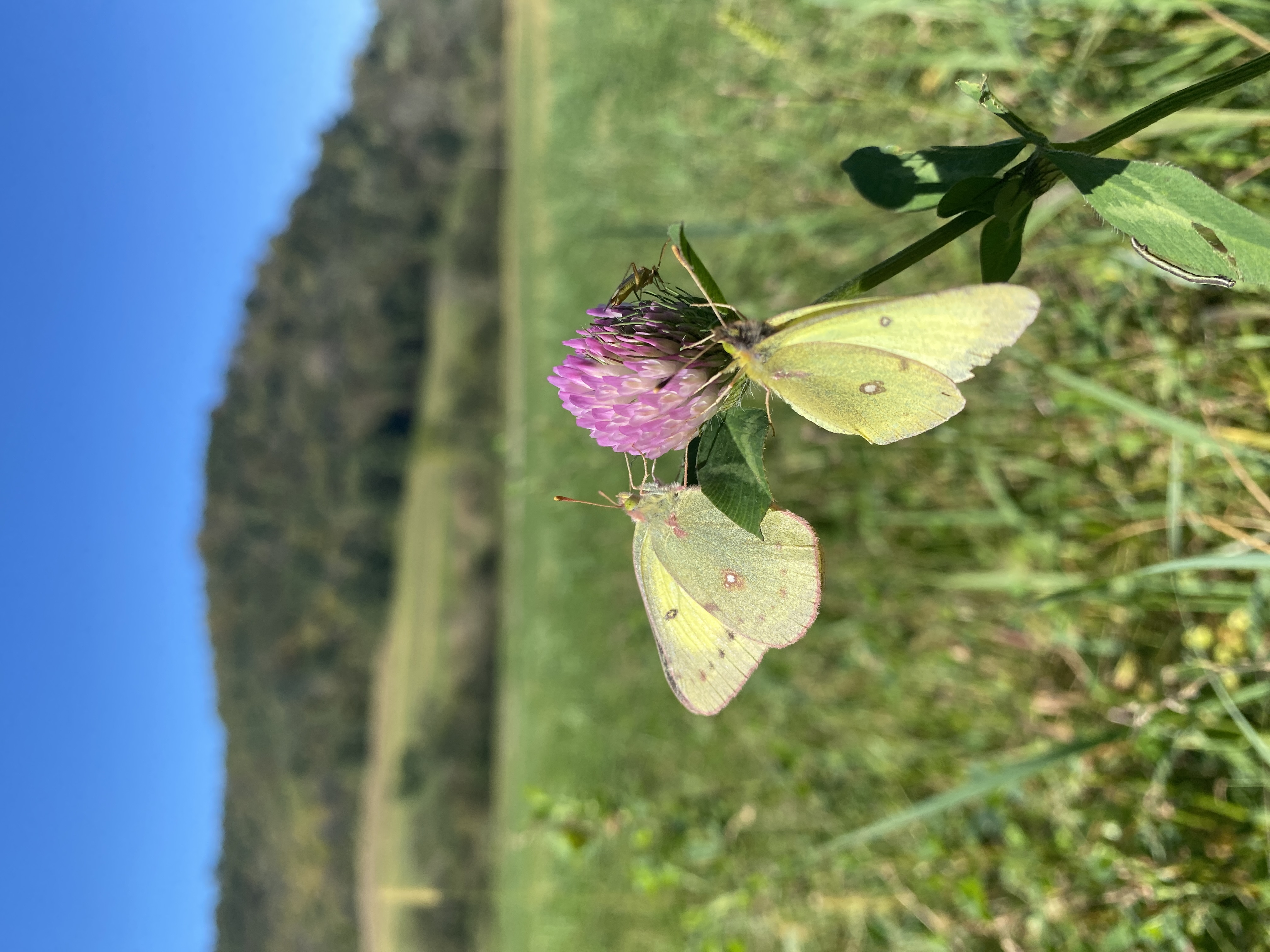
Since moving to Viroqua for their retirement years, Ralph and Marilyn regularly visit the land to enjoy the peace and beauty they’ve worked hard to protect. They’re planning to convert a portion of the agricultural fields to perennial cover in the future to provide additional habitat for grassland nesting birds and pollinators.
The permanent protection of this farm supports local planning initiatives, including the Vernon County Land & Water Resource Management Plan, the Vernon County Farmland Preservation Plan, and the Vernon County Comprehensive Plan. The open fields of the property and proximity to La Crosse put this property at high risk for residential development. Marilyn and Ralph reached out to the Conservancy and were motivated, in part, by the volume of offers they had received from others interested in purchasing and developing their land.
“Marilyn and Ralph have cared for their land in ways that protect not only their soil and their neighbors in the valley, but everyone downstream, too," said Connor Kotte, Stewardship Specialist at the Conservancy. “Their stewardship of the land is an ideal pairing of sustainable agriculture and habitat management.”
Marilyn and Ralph retain ownership of their land, and the conservation easement they’ve signed with the Conservancy allows them to continue managing it as they have. It even allows them, or future owners, to build a home or cabin in a designated area of the property. Such tailoring of a conservation easement is only possible before it is recorded at the county Register of Deeds. The easement does not allow for public access and permanently protects the land and resources from habitat destruction, residential development, mining, detrimental practices, and fragmentation from subdivision.
Thanks to the conservation efforts of Marilyn and Ralph, wildlife will continue to thrive in the valley. Learn more about how to set up a conservation agreement for your property on our website under Land Protection.