
Inspired by Aldo Leopold, a Vernon County couple restores their land and ensures its permanent protection
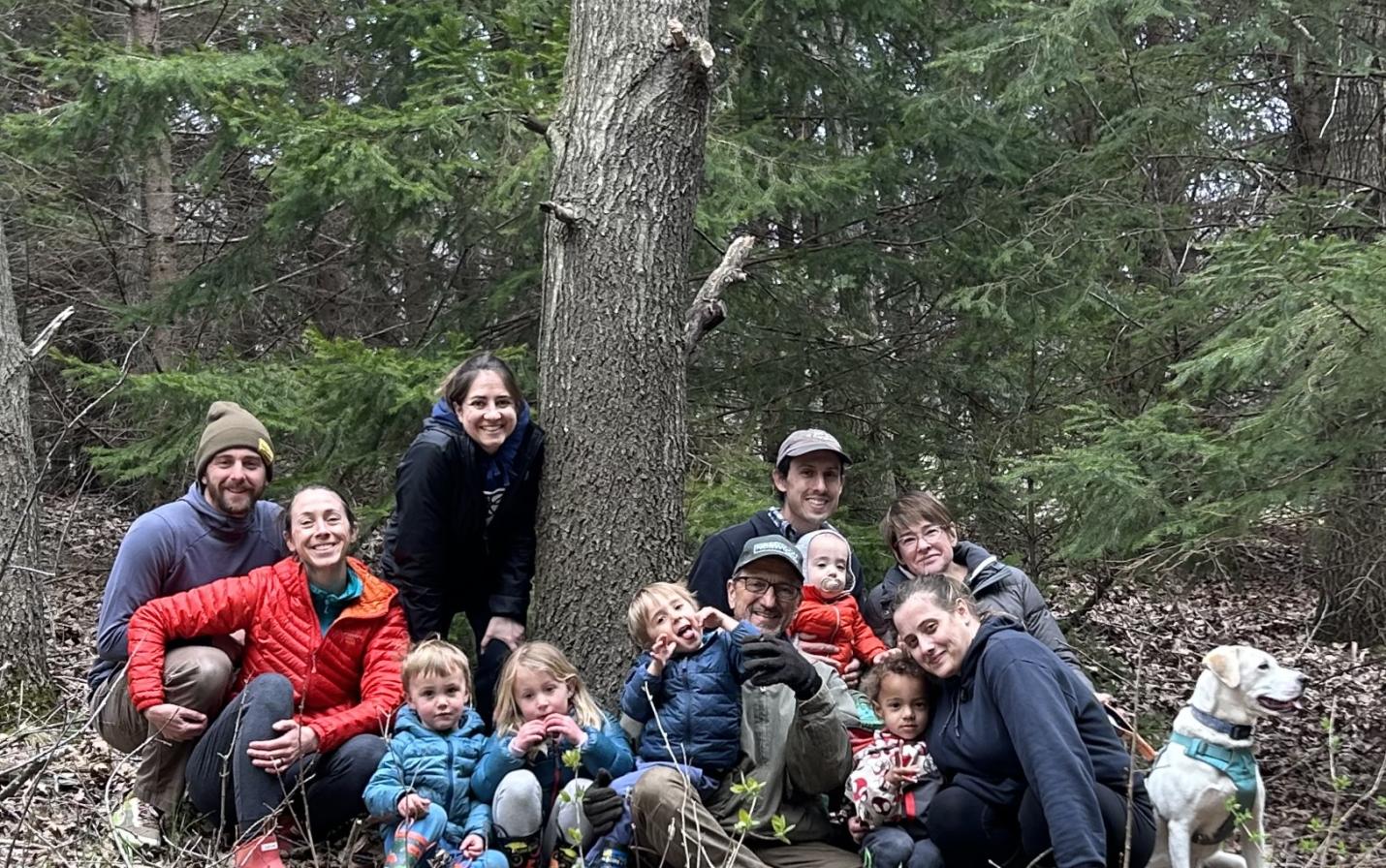
(Photo above: Tom and Gail Novacheck and family gather around one of the first red oak trees planted in the spring of 1997, fondly called the “Grandpa Tree,” for Grandpa Ervin. Contributed photo)
“A thing is right when it tends to preserve the integrity, stability, and beauty of the biotic community. It is wrong when it tends otherwise.” – Aldo Leopold. Land ethic, a term coined by the long-time Wisconsin resident Aldo Leopold in his famous work, A Sand County Almanac, is a philosophy about how humans should treat the land. On a quiet stretch of rolling hills and coulees in eastern Vernon County, husband and wife, Tom and Gail Novacheck, have taken Leopold’s words to heart.
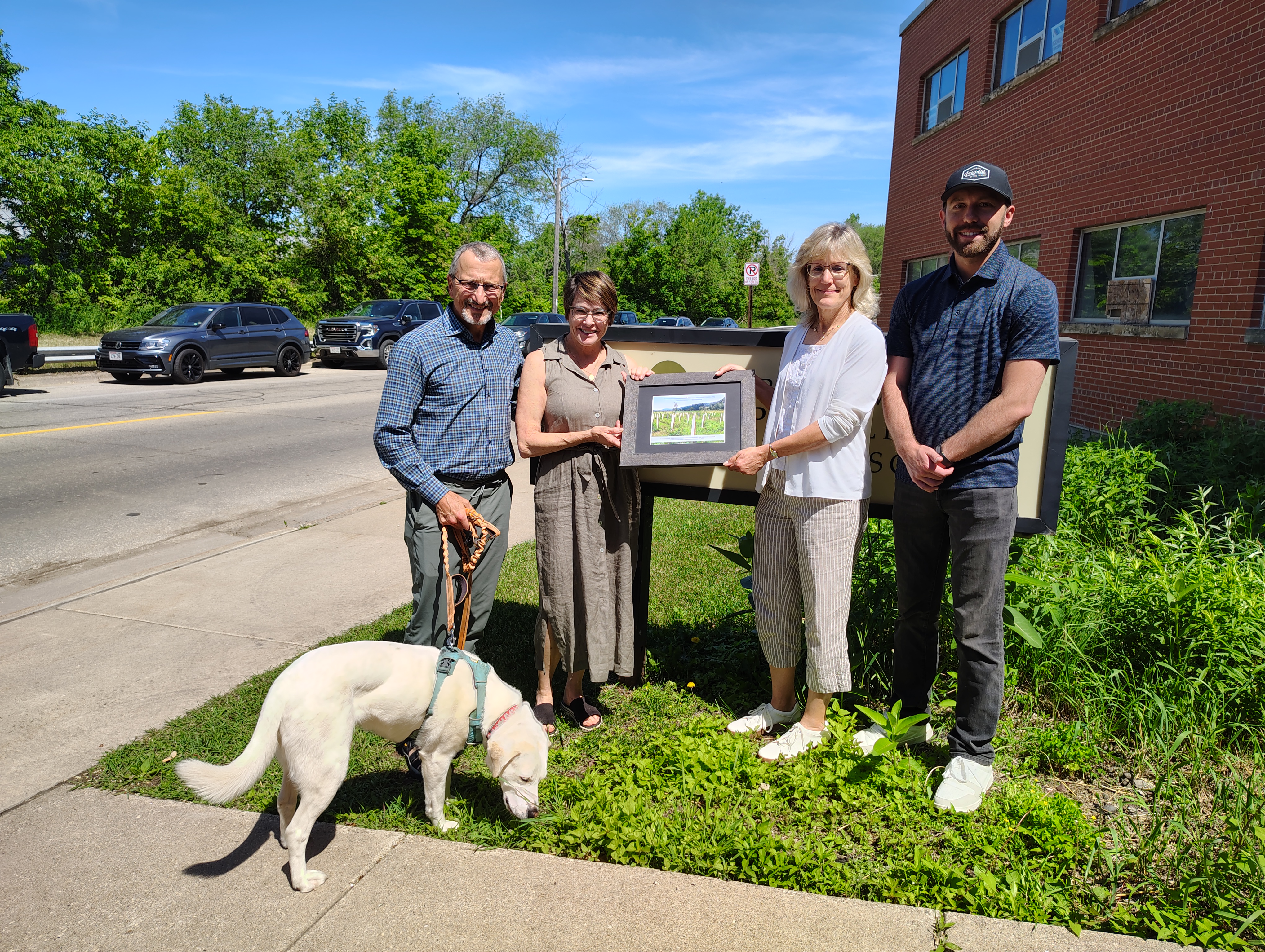
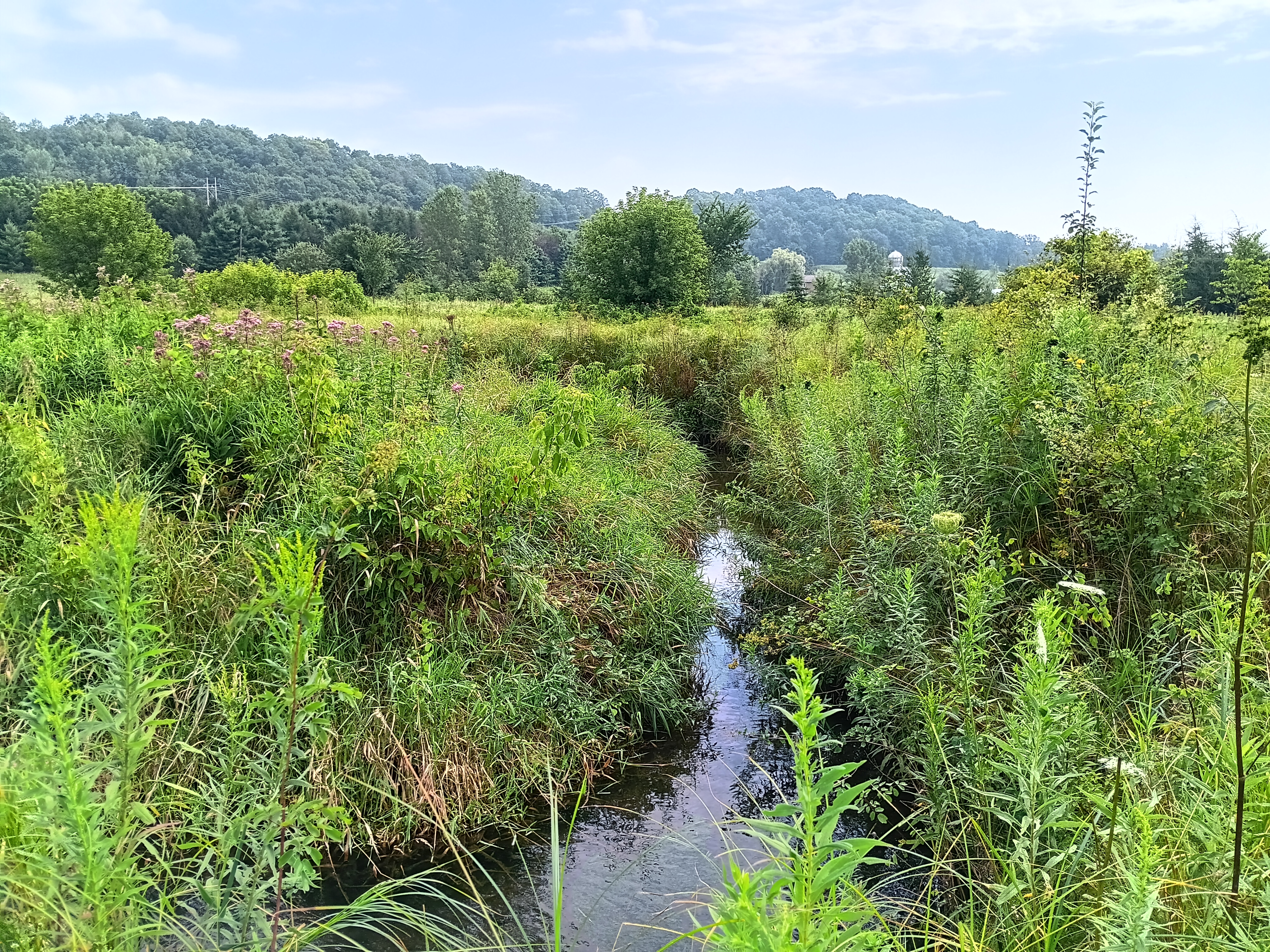
On May 29, 2026, Tom and Gail Novacheck signed a conservation easement with Mississippi Valley Conservancy, a nonprofit land trust in La Crosse, permanently protecting their scenic 121-acre property, which consists of blufflands, wetlands around the West Branch Baraboo River, prairie, and farmland. The conservation easement protects the land from mining, residential development, and fragmentation from subdivision and supports Mississippi Valley Conservancy’s mission of conserving native habitats and farmlands for the current and future health and well-being of the Driftless Area.
Tom Novacheck, a native of the Hillsboro area, and his family have a long history with both the land they have now protected and adjacent land, now owned by Tom’s sisters. The Schmidt family (Tom’s great great grandparents) purchased a portion of the land in 1873. The family name of the property changed from Schmidt to Novacheck when Tom’s grandmother married. The first two generations on the property practiced subsistence farming. Later, Tom’s parents, Ervin and Rosemarie, transitioned the property to a family dairy farm and expanded the farm by purchasing adjacent properties. “We inherited a love of the land from our prior generations,” says Tom, “Knowing and respecting the land were the lessons passed on whether it was the appreciation of phenology in the cyclical appearance of wildflowers and birds or the early adoption of soil conservation practices such as strip cropping and grass waterways.”
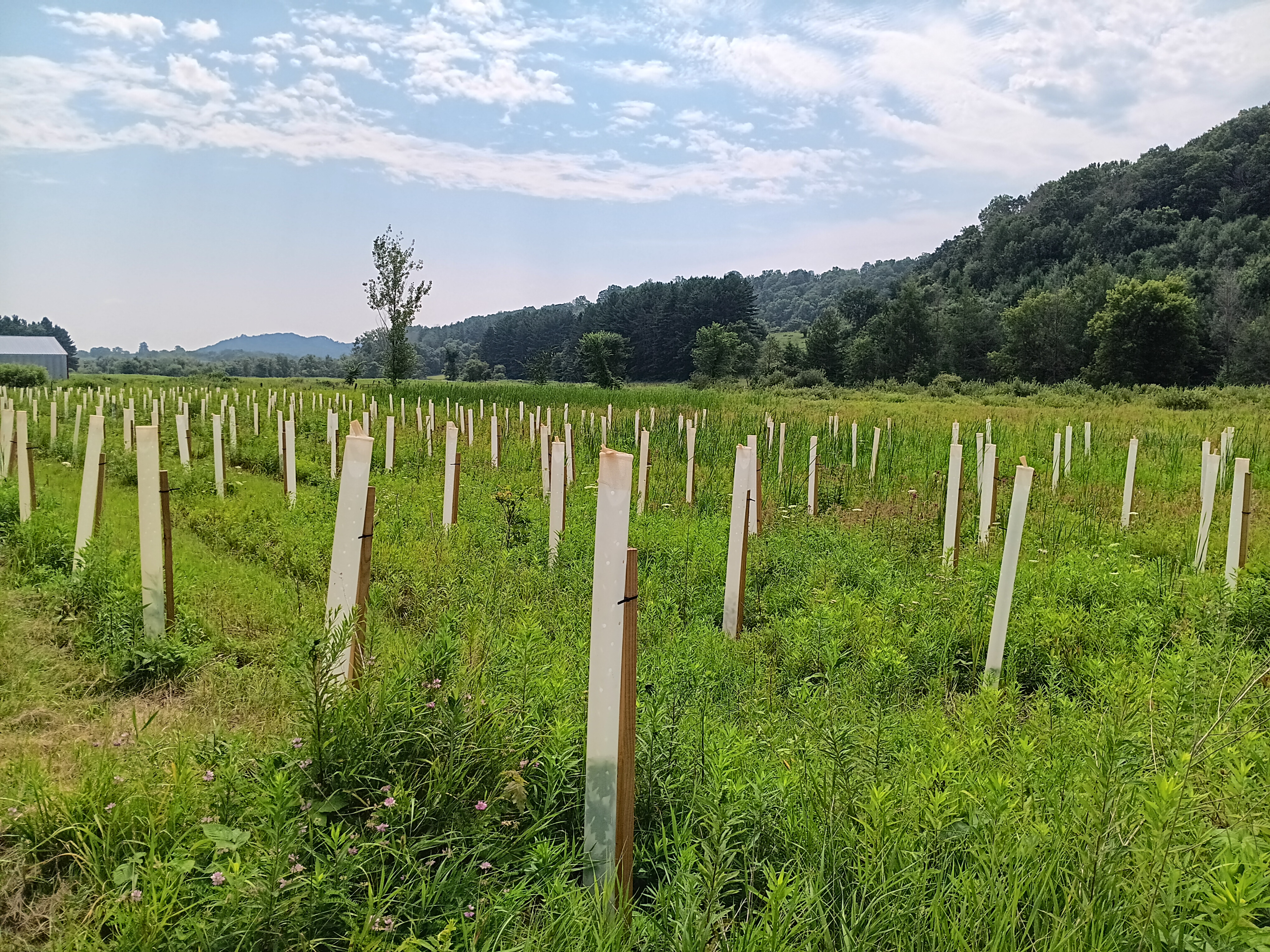
Tom and Gail would go on to start their own efforts to transform the property, restoring the native habitats and converting the agricultural fields to forest and prairie. With patience and a long-term vision, they began to re-shape the land. Their tree planting efforts began in spring of 1997, and since that time, approximately 70,000 – 80,000 trees have been planted on the property. “Ervin recognized the risk of land degradation and willingly helped with the early years of tree planting, even though we talked about how hard our prior generations had worked to clear the fields in order to provide for their families,” says Tom.
Tom and Gail worked with Wisconsin Department of Natural Resources foresters for species recommendations, which at the time largely consisted of alternating rows of conifers and mixed hardwoods, such as red and white oak. In addition to their tree planting efforts, Tom and Gail have done a tremendous amount of invasive species control, including removal of prickly ash, sumac, autumn olive, honeysuckle, and burdock. They also have conducted their own controlled burns to improve the health of their wildlife habitat and control undesirable brush.
In 1999, the Hillsboro Watershed Project was completed, which included the construction of a dam on the property, designed by the Army Corps of Engineers. The pond created by the dam has a 50-acre drainage area and was specifically designed to capture runoff from the surrounding agricultural lands. This conservation practice continues to function today, and the pond provides important habitat for herons, waterfowl, frogs, and turtles. With the restoration of the land, other wildlife species have followed, reclaiming their former niches.
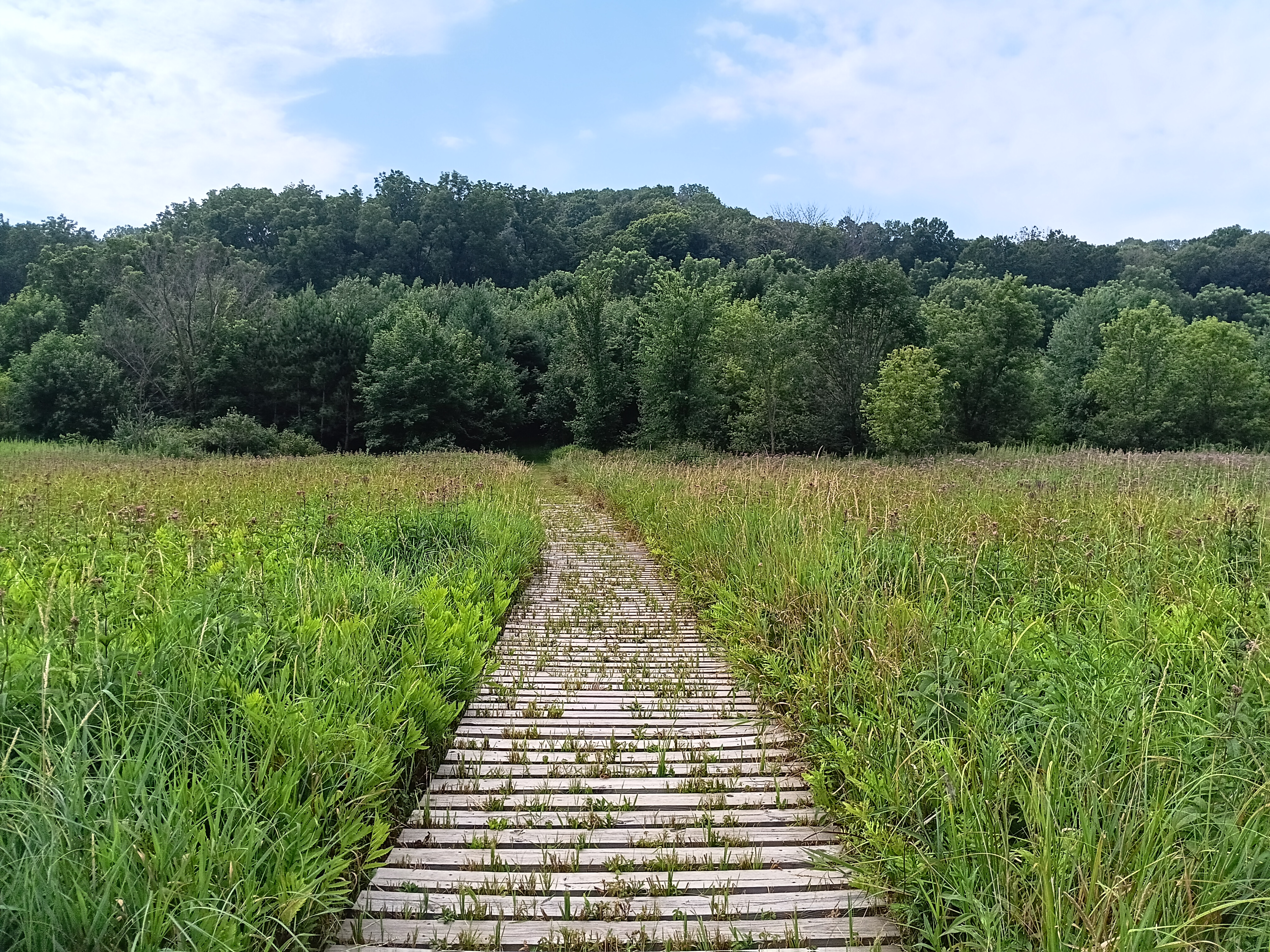
Once a rare occurrence, bald eagles now commonly soar overhead, and owls hoot through the night. Bobcats and coyotes prey upon a plethora of rabbits and rodents, which rely on the reforested land for cover. In the southern portion of the property, beaver have returned along the West Branch Baraboo River, and much like the Army Corps of Engineers, they have built dams and ponds of their own. Each native species returning to the land is a measure of success, not marked by numbers, but by balance.
As Aldo Leopold wrote, “One of the penalties of an ecological education is that one lives alone in a world of wounds.” Tom and Gail understand this deeply but also understand the satisfaction of helping those wounds heal. At the heart of the Novacheck story is Leopold’s belief that a land ethic cannot be inherited or imposed – it must be developed. “We came to the idea of a land ethic by figuring out what we wanted. And then you read Aldo Leopold’s work and realize the similarities with his land ethic; both of which are consistent with the Conservancy’s mission,” says Tom.
For Tom and Gail, stewardship has not been about following a script but about learning their land well enough to make good decisions on its behalf. “It’s hard to even say how significant it’s been,” says Tom, “The house once had a clear view of the surrounding agricultural fields in the valley, which are now covered in more than 70,000 trees that we have planted. Our oldest planted oak trees are already 12-14 inches across.”
For Tom and Gail, the idea of building a land ethic has always been essential and passing that down to their children is something they are both proud of. When asked about their favorite memories, Tom and Gail reflected on how they would take their children and dogs camping before there was even a house on the land. Their oldest son would go on to get married by the pond on the property. Each year Tom and Gail continue to steward forward, getting their family involved with their annual tree planting efforts.
Walking the property today, it is easy to feel the Novacheck family’s land ethic at work. The land is not frozen in time, nor returned to some imagined past. Instead, it is alive and dynamic. It reflects a partnership between human intention and natural process, guided by vision and patience. The conservation easement that Tom and Gail have signed with Mississippi Valley Conservancy will ensure that their stewardship of the land will not be undone. With the conservation easement, Tom and Gail retain ownership of the land and will be able to continue to manage the land as they have.
While the signing of the conservation easement was another step in protecting the property for perpetuity, the Novacheck property stands as a reminder that conservation does not always begin with protection on paper. Sometimes, it begins with planting a tree. Or removing an invasive shrub. Or deciding, day after day, to act in the land’s best interest. In doing so, Tom and Gail have ensured that this piece of Vernon County continues its long story – one rooted in history, shaped by care, and guided by a deeply held land ethic that will echo across generations. And now, thanks to their conservation-mindedness, their piece of Vernon County is permanently protected.